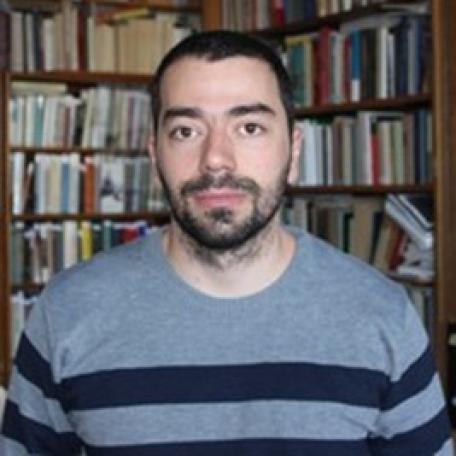
In this interview, Konstantin Golev, the Associate Professor at the ‘Institute for Historical Studies at the Bulgarian Academy of Sciences’ discusses his on-going research into “Winter is Coming – the Seasonal Nature of Nomadic Warfare”.
His research focusses on the interaction between the nomadic tribal peoples of the vast Eurasian steppe, specifically the Cumans and Mongols, and their sedentary neighbours to the west. He does this mostly through a detailed analysis of the asymmetrical nature of warfare of nomadic peoples, who, unlike most sedentary populations, preferred to go to war, invade and raid in winter, and avoided fighting in summer. Konstantin explains that this unusual seasonal nature of warfare is largely due to there being more grass available for their many horses in the cooler, wetter months, than the hotter and drier part of the year.
Konstantin also shows the different approach to battle between the nomadic peoples and their sedentary neighbours. The nomadic fighters each had several, light, fast horses with limited armour, while their opponents favoured fewer, stronger, well armoured but slower ‘knightly’ mounts. For the nomadic people, warfare and fighting was purely an economic function and had little to do with political ambitions, therefore when they were unlikely to win a battle, they simply retreated.
In addition, Konstantin explains the challenges of studying Medieval Eurasian nomadic peoples. Due to the nature of their constantly mobile life-style, they leave limited archaeological records and, all but two tribal groups, have left no written records.
This podcast is part of a series of interviews covering central Europe in the medieval period for MECERN and CEU Department of Historical Studies.